In Person:
160 Christian St, Oxford, CT 06478
Online Holistic Therapy:
Connecticut, Maryland, Virginia and Florida. HIPAA. Secure Video. Convenient. In-Person in CT
Call: 802-578-3700 or Email: connect@mindbodywelltherapy.com
A Holistic Integrative Psychotherapy practice offering Ketamine-Assisted Psychotherapy and NeuroEase Brain Training (EEG Neurofeedback)
160 Christian St, Oxford, CT 06478
Connecticut, Maryland, Virginia and Florida. HIPAA. Secure Video. Convenient. In-Person in CT
Call: 802-578-3700 or Email: connect@mindbodywelltherapy.com
Is Neurofeedback Right for Me? created 9-24-26 ~ Written by Lucrezia Mangione, LCPC, NCC, BC-TMH, DCEP

People come to neurofeedback from different starting points.
You may already know a little about EEG brain training and wonder whether it could make sense for you. You may have done meaningful work in psychotherapy or tried medication, mindfulness, or other approaches and still feel curious about another way of working with patterns of regulation. Or you may simply be interested in a non-medication-based form of training and want to understand what participating requires.
If you're wondering, Is Neurofeedback Right for Me?, you don't need to know the answer with certainty yet.
At Mind Body Well Therapy, PLLC, I provide NeuroEase EEG Brain Training & Neurofeedback, an individualized approach that combines at-home brain training with professional assessment, monitoring, and adjustment over time. For a broader overview of the service, visit EEG Brain Training & Neurofeedback.
I'm Lucrezia Mangione, LCPC, NCC, BC-TMH, a Holistic Integrative Psychotherapist. My clinical work is grounded in evidence-based psychotherapy and guided by an evidence-informed, whole-person approach to Holistic Integrative Psychotherapy. With NeuroEase, that means considering your goals, history, current care, expectations, practical circumstances, and how you respond to the training itself. For some clients, NeuroEase may stand on its own or fit alongside holistic therapy as part of a broader plan of care.
If this sounds like something you may want to explore, you don't have to answer every question before reaching out.

Ready to explore support? Schedule a consultation to ask questions and consider what may be a good fit.
There is no single type of person who seeks neurofeedback, and fit involves more than a diagnosis or list of symptoms.
You may understand some of your patterns intellectually but remain curious about an approach that works with brain and nervous-system regulation in another way. Perhaps psychotherapy or other care has been useful, but there are areas where you'd like additional support. Neurofeedback can sometimes add a different kind of support alongside Holistic Integrative Psychotherapy or other care that is already helping.
That doesn't mean your previous treatment failed. It may simply mean you now have more information about what has helped, what remains difficult, and what you'd like to approach differently.
Neurofeedback may be worth exploring if you:
The question Is Neurofeedback Right for Me? can't be answered by checking off every item on a list. These aren't requirements, and recognizing yourself in several of them doesn't predict a particular outcome. They're starting points for considering whether NeuroEase belongs among your options.
If you're still learning how EEG brain training works, What Is Neurofeedback Treatment? offers a more detailed explanation.
Neurofeedback is training. It isn't something that simply happens to you while you remain passive.
With NeuroEase, much of the training takes place at home. At-home training doesn't mean entirely self-directed training.
You don't have to consciously try to make your brain "behave" correctly, and you aren't expected to arrive already knowing how to use EEG equipment. Learning the technology can take a little adjustment at first.
But less talking doesn't mean less participation.
Consistency, attention to your experience, and ongoing monitoring all matter. Training happens repeatedly over time, and I review how it's going and whether adjustments make sense. Your experience matters alongside the information generated through the training itself.
Consistency doesn't mean perfection. Work, caregiving, travel, health needs, and ordinary life can affect any routine. The useful question is whether you can make a realistic place for regular training and stay engaged enough for us to understand how the process is affecting you.
If regular at-home training would be hard to sustain right now, timing may be part of your decision.
For more detail about the service itself, explore EEG Brain Training & Neurofeedback - page coming soon.
People don't all respond to neurofeedback in the same way.
Some people may notice changes relatively early. For others, changes may be more gradual, subtle, uneven, or difficult to evaluate at first. Sometimes progress becomes clearer when you look back and realize that something in daily life feels a little different than it did before.
There's no guaranteed number of sessions that produces a particular result, and I don't believe brain training should follow the same timetable for everyone. Instead, we look at the goals that brought you to NeuroEase, what you're noticing in daily life, how you're responding to training, and whether the process continues to make sense.
Training is monitored, and adjustments are made when appropriate—but that flexibility doesn't mean everyone will respond in the way they hope.
Consistency matters because neurofeedback is a learning process rather than a single event. At the same time, more training is not automatically better.
And sometimes neurofeedback turns out not to be the right tool.
Realistic expectations leave room for all of that—patterns over time, rather than judging the process by one session, one difficult day, or one hoped-for timeline.
If this kind of process sounds workable for you, a consultation is a reasonable next step.
Ready to explore support? Schedule a consultation to ask questions and consider what kind of care may feel right for you.
Being interested in neurofeedback doesn't mean you need to begin immediately.
It may make sense to pause or have a more detailed conversation first if:
None of these automatically means neurofeedback is wrong for you. Sometimes the issue is timing. Sometimes another form of care may be a better next step. Sometimes you simply need a clearer understanding of what NeuroEase would ask of you before deciding.
If you're comparing different MBWT services, Choosing an Approach (page coming soon) can help you think through how psychotherapy, ketamine-assisted psychotherapy, and neurofeedback differ.
For current NeuroEase fees and payment information, visit Fees & Insurance.
A webpage can help you think about fit, but it can't determine it for you.
A consultation gives us a place to talk about what brings you to neurofeedback, what you hope may change, what you've already tried, and whether the practical commitment fits your life. You don't need to meet every possible fit indicator or decide in advance that you're going to begin NeuroEase.
Sometimes a consultation confirms that neurofeedback seems worth exploring. Sometimes it raises questions that need more consideration. And sometimes another approach may make more sense right now. That might mean returning to holistic therapy, exploring Holistic Integrative Psychotherapy, or considering another form of care that better fits the larger picture. That's useful information too.
NeuroEase is available to clients in Connecticut, Maryland, Virginia, and Florida.
If you recognize yourself in much of what you've read here and NeuroEase seems like a reasonable possibility, you're welcome to reach out.
Ready to explore support? Schedule a consultation to ask questions and consider what kind of care may feel right for you.
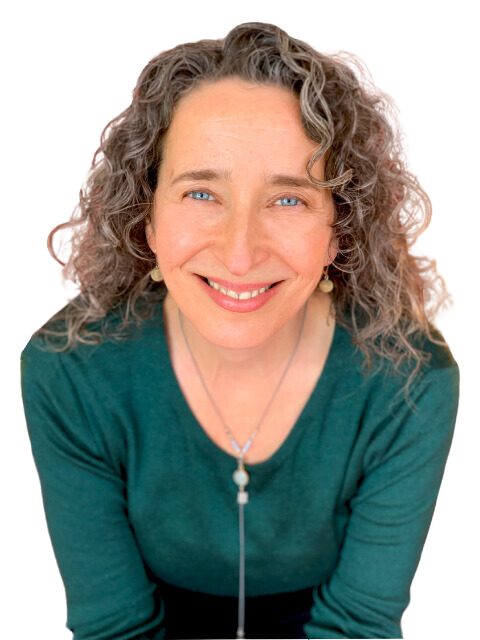
Lucrezia Mangione is a licensed professional counselor and founder of Mind Body Well Therapy, Pllc. Her work is grounded in evidence-based psychotherapy and guided by an evidence-informed, whole-person approach that considers the interconnectedness of mind, body, heart, spirit, and lived experience.
She works with thoughtful, sensitive adults who may feel overwhelmed, anxious, emotionally exhausted, disconnected, or stuck, including caregivers, nurses, physicians, therapists, and other healthcare and helping professionals.
Mind Body Well Therapy, Pllc is a private psychotherapy practice offering holistic integrative psychotherapy, ketamine-assisted psychotherapy and integration support, and NeuroEase EEG brain training and neurofeedback. Information on this website is provided for educational and informational purposes and is not intended for self-diagnosis or as a substitute for individualized medical, psychological, or mental health care. See the Privacy Policy and Disclaimer for more details.

Holistic Integrative Psychotherapy for Thoughtful Adults Who’ve Been Carrying Too Much: Whole-person psychotherapy for highly sensitive people, caregivers, helping professionals, and healthcare providers. Ketamine-assisted psychotherapy (KAP) and NeuroEase EEG brain training are available when appropriate.
In-person care: Oxford, Connecticut
Online care: Connecticut, Maryland, Virginia, and Florida
Mind Body Well Therapy, Pllc
Lucrezia Mangione, LCPC, LPC, NCC, BC-TMH, DCEP
Licensed in Connecticut, Maryland and Virginia
Registered as an out-of-state telehealth provider in Florida
Candidate for Board Certification in Neurofeedback through BCIA
© Copyright 2008 - 2026 by MindBodyWellTherapy.com. All rights reserved worldwide and universally.
