In Person:
160 Christian St, Oxford, CT 06478
Online Holistic Therapy:
Connecticut, Maryland, Virginia and Florida. HIPAA. Secure Video. Convenient. In-Person in CT
Call: 802-578-3700 or Email: connect@mindbodywelltherapy.com
A Holistic Integrative Psychotherapy practice offering Ketamine-Assisted Psychotherapy and NeuroEase Brain Training (EEG Neurofeedback)
160 Christian St, Oxford, CT 06478
Connecticut, Maryland, Virginia and Florida. HIPAA. Secure Video. Convenient. In-Person in CT
Call: 802-578-3700 or Email: connect@mindbodywelltherapy.com
Brain Training page updated 9-23-2026~ Written by Lucrezia Mangione, LCPC, NCC, BC-TMH, DCEP
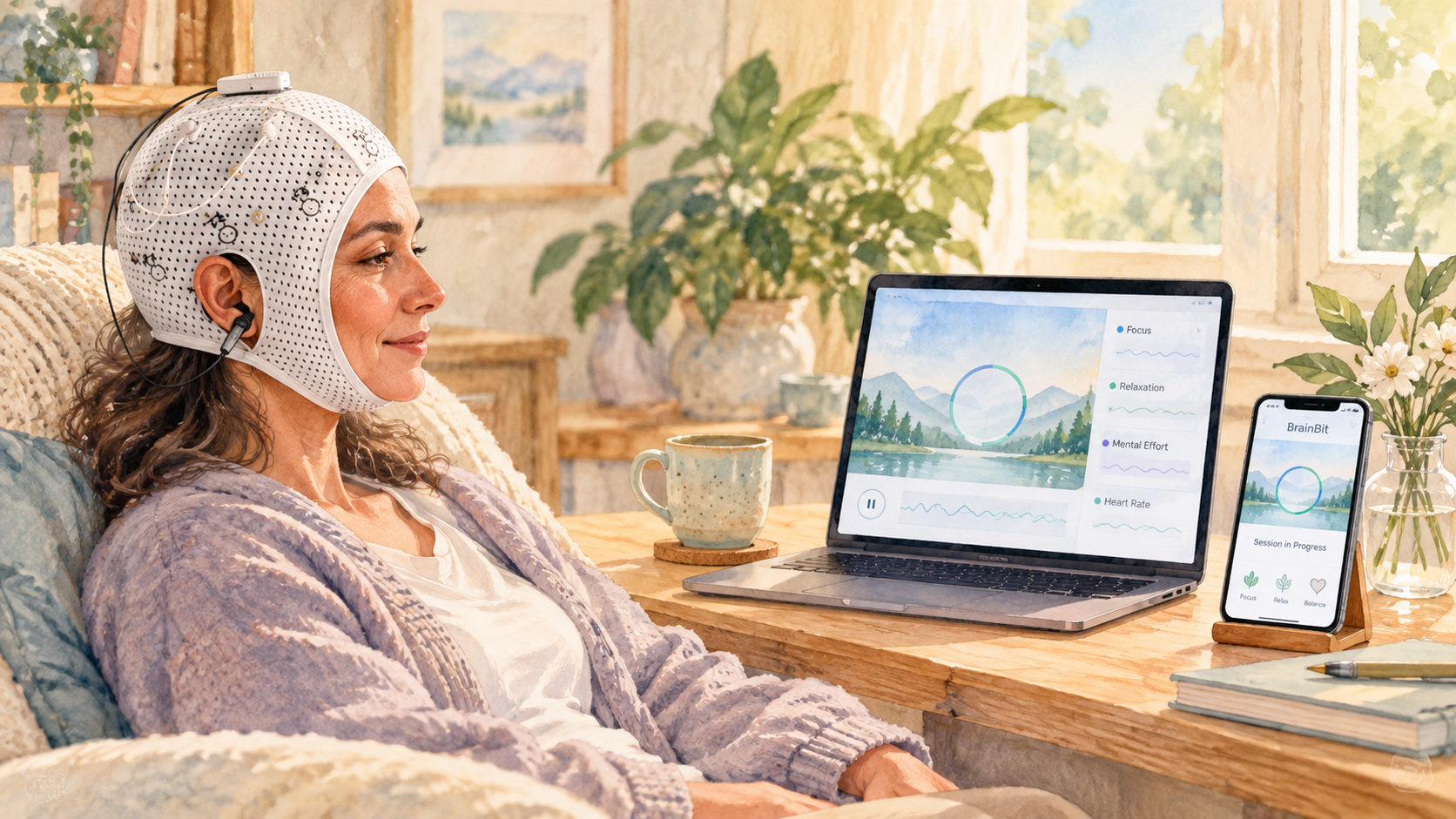
Sometimes you understand what is happening but still feel as though your brain or nervous system has not quite gotten the message. You may know what helps you feel calmer, more focused, or more steady, yet find it difficult to get there consistently.
Brain Training & Neurofeedback offers another way to work with those patterns. At Mind Body Well Therapy, PLLC, I provide NeuroEase℠ Brain Training, a personalized, professionally guided approach that allows you to complete much of your neurofeedback training at home.
You may be exploring neurofeedback on its own or wondering how it could fit alongside holistic integrative psychotherapy or care you already receive. The process begins with assessment rather than a one-size-fits-all program, and your training is monitored and adjusted over time.
Neurofeedback is not a magic cure-all, and it is not for everyone. It is one option that may be worth exploring when it fits the person, the goals, and the larger picture of care.
Already interested in NeuroEase? You are welcome to schedule a consultation, offered at no charge, to ask questions and consider whether brain training may be a good fit for you.

Ready to explore support? Schedule a consultation to ask questions and consider what may be a good fit.
Neurofeedback is also called EEG brain training, EEG biofeedback, or neurotherapy. Whatever term is used, the basic idea is fairly simple.
Small sensors measure electrical activity produced by your brain. That information is sent to the neurofeedback system, which provides feedback based on what it detects.
Said another way, neurofeedback gives your brain information about its own activity while you are training.
One way to think about it is as a mirror for your brain. A mirror does not make you move differently. It gives you information you could not otherwise see. Neurofeedback works with that same basic principle of feedback and learning.
The sensors measure EEG activity. They are not sending electricity into your brain.
This also distinguishes EEG brain training from games and apps marketed simply as "brain training." Those may involve memory exercises, puzzles, or cognitive practice. Neurofeedback specifically uses information from your own brain activity as part of the training process.
You do not need to understand brainwaves or EEG technology to participate. For a deeper explanation, you can explore What Is Neurofeedback Treatment?, What Is Biofeedback Therapy?, and The Difference Between Biofeedback and Neurofeedback.
People become interested in neurofeedback for different reasons.
You may feel chronically keyed up, have difficulty settling after stress, become overwhelmed easily, feel mentally depleted, or notice that sustaining attention takes more effort than you would like. If you are highly sensitive, you may also recognize how quickly stimulation can accumulate.
Others explore neurofeedback after doing useful work in psychotherapy, including holistic integrative psychotherapy. They may understand their patterns well but remain curious about an approach that works with brain and body processes differently.
That does not mean therapy has failed. And experiencing anxiety, exhaustion, difficulty focusing, or overstimulation does not automatically mean that you need neurofeedback.
These are reasons to explore the option, not indications that neurofeedback is automatically the right fit.
For some people, EEG Brain Training & Neurofeedback becomes one part of a broader whole-person approach. It may complement holistic therapy or other healthcare without replacing what is already helpful.
If sensitivity or emotional depletion is an important part of what brings you here, you may also want to explore Therapy for Highly Sensitive Adults or Emotional Exhaustion page that coming soon.
NeuroEase is the way I provide EEG Brain Training & Neurofeedback through Mind Body Well Therapy, PLLC.
Rather than giving you equipment and leaving you to figure it out on your own, NeuroEase combines personalized at-home EEG brain training with professional assessment, monitoring, and support.
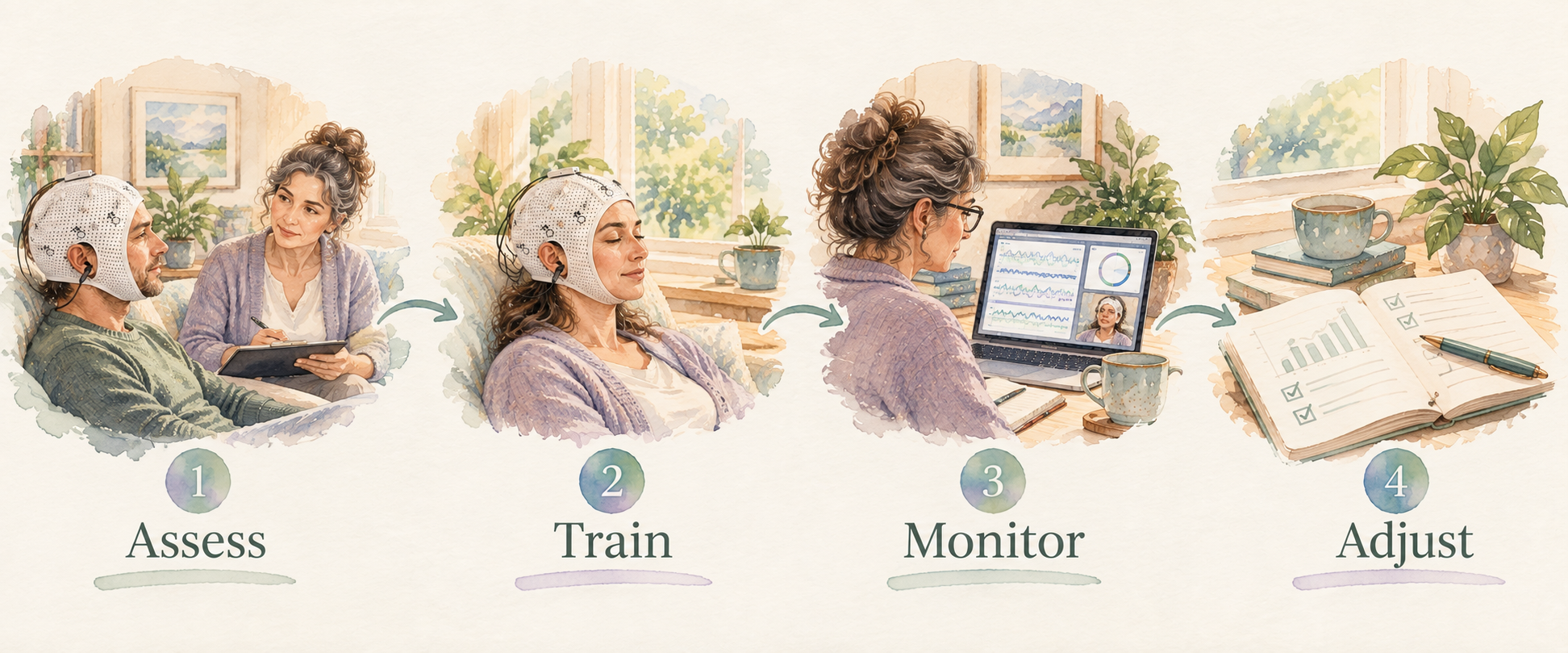
The process begins with an Intake & NeuroAssessment. This helps me understand what is bringing you to neurofeedback, what you hope to work toward, relevant history, and the larger context of your mental health and well-being.
From there, your brain training is individualized.
NeuroEase uses Muse and BrainBit Flex as EEG hardware options and Myndlift and DiveNeuro as neurofeedback software applications. The particular equipment and training approach depend on your individual plan.
You complete your training at home rather than traveling to an office each time you train. But at-home does not mean entirely self-directed.
I remain involved in reviewing your experience and relevant training information, monitoring how the process is going, and making adjustments when appropriate.
The larger rhythm is:
Assess → Train → Monitor → Adjust
That individualized guidance is an important distinction between NeuroEase and simply downloading a brain-training app or purchasing a device on your own.
Some people use NeuroEase together with holistic integrative psychotherapy at Mind Body Well Therapy, PLLC. Others already have a therapist they value and want to add neurofeedback without changing that relationship.
Curious about whether this kind of at-home training could work for you? A consultation gives us space to talk through the model and your questions before you make a decision.
Once your training plan is established, you complete your neurofeedback sessions at home using the equipment and instructions provided for you.
The EEG sensors are positioned according to your training instructions so they can measure brain activity during the session. The NeuroEase technology then uses that information as part of the feedback process.
You do not have to consciously try to make your brain "behave" correctly. Neurofeedback does not depend on intellectually figuring out what your brain should do next. Your job is primarily to participate in the training rather than force a particular state.
Learning a new piece of technology can take a little adjustment at first. You are not expected to arrive already knowing how to use EEG equipment.
Training takes place repeatedly over time, and consistency matters. Exactly how often you train and how the process develops depends on your individual plan.
As you move through the program, I review how things are going and make changes when appropriate. Your experience matters alongside the information generated through the training itself.
EEG brain training and psychotherapy are not the same thing.
Psychotherapy gives you a place to work with thoughts, emotions, relationships, experiences, patterns, and change within a therapeutic relationship. Neurofeedback is a form of training that works with EEG activity and feedback.
If you are already working with a therapist you trust, my response is simple:
Great. Stay with them.
You do not need to leave a good therapeutic relationship simply because you are interested in neurofeedback.
Some NeuroEase options integrate brain training with holistic integrative psychotherapy through Mind Body Well Therapy, PLLC. Others allow you to keep working with your existing therapist while adding NeuroEase as another form of support.
This fits the larger philosophy behind my holistic therapy work: different forms of support can have different jobs, and the right combination depends on the person.
With your permission and when useful, collaboration with your therapist or another healthcare provider can help keep your care coordinated.
Neurofeedback is also not a reason to stop medication, psychotherapy, or other healthcare on your own. Decisions about those treatments belong in conversation with the professionals responsible for that part of your care.
If you are sorting through different approaches, Choosing Between Therapy, KAP & Neurofeedback page can help clarify their different roles. That page is coming soon.
People do not all respond to neurofeedback in the same way.
Some changes may be subtle or take time to notice. Sometimes progress becomes clearer when you look back and realize that something that once required a great deal of effort feels a little different.
And sometimes neurofeedback turns out not to be the right tool.
There is no guaranteed number of sessions in which you should expect a particular result, and I do not believe it is useful to approach brain training as though everyone should follow the same timetable.
Instead, we look at the goals that brought you to NeuroEase, what you are noticing in daily life, how you are responding to training, and whether the process continues to make sense. That broader, individualized view is also consistent with how I approach holistic therapy.
Consistency matters because neurofeedback is a learning process rather than a single event. At the same time, more training is not automatically better.
You may notice changes in areas that originally brought you to brain training, such as how easily you settle, sustain attention, respond to stress, or recover after becoming overwhelmed. Those possibilities are not promises, and they will not look the same for everyone.
EEG Brain Training & Neurofeedback can be a useful tool. It is not a cure-all, and outcomes cannot be guaranteed.
If you want to go further into the research and mechanism, What Is Neurofeedback Treatment? offers a deeper educational route.
You do not need to answer that question with certainty before contacting me.
It may be worth having a conversation if you:
Fit involves more than a diagnosis or list of symptoms. Your goals, history, current care, expectations, ability to participate in training, and practical circumstances all matter.
Sometimes a conversation leads to the conclusion that neurofeedback is not the best next step. That is useful information too.
If you would like more help thinking specifically about fit, Is Neurofeedback Right for Me? can offer additional decision support.
If NeuroEase sounds worth exploring, schedule a consultation. We can talk about what is bringing you here and whether this approach belongs among your options.
The first step is a consultation, offered at no charge.
This is a conversation, not a commitment to begin brain training. It gives you a chance to ask questions and gives me an opportunity to consider whether NeuroEase may be an appropriate direction to explore.
If we decide to proceed, the next step is the Intake & NeuroAssessment. Before that appointment, I review the information you provide so I can come prepared with questions. I am a note-taker by nature, and I want to understand not only what you want help with but also the context around it.
The assessment helps inform your individualized training approach and the level of support that makes sense for you. If holistic therapy is also part of your care, we can consider how NeuroEase may fit alongside it.
NeuroEase Brain Training & Neurofeedback is available to clients in Connecticut, Maryland, Virginia, and Florida.
For practical information about fees, scheduling, common questions, and what it is like to work together, you can also explore Fees & Insurance, Getting Started, the FAQ, and Client Experiences page that's coming soon.
You do not have to decide on your own whether neurofeedback is the right choice.
If you are interested in Brain Training & Neurofeedback and would like to understand whether NeuroEase may fit what you need—on its own, alongside holistic therapy, or as part of a broader psychotherapy plan—you are welcome to reach out.
Ready to explore support? Schedule a consultation to ask questions and consider what kind of care may feel right for you.
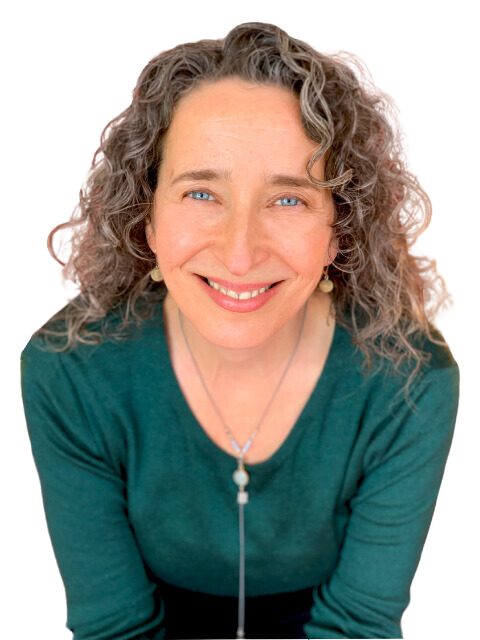
Lucrezia Mangione is a licensed professional counselor and founder of Mind Body Well Therapy, Pllc. Her work is grounded in evidence-based psychotherapy and guided by an evidence-informed, whole-person approach that considers the interconnectedness of mind, body, heart, spirit, and lived experience.
She works with thoughtful, sensitive adults who may feel overwhelmed, anxious, emotionally exhausted, disconnected, or stuck, including caregivers, nurses, physicians, therapists, and other healthcare and helping professionals.
Mind Body Well Therapy, Pllc is a private psychotherapy practice offering holistic integrative psychotherapy, ketamine-assisted psychotherapy and integration support, and NeuroEase EEG brain training and neurofeedback. Information on this website is provided for educational and informational purposes and is not intended for self-diagnosis or as a substitute for individualized medical, psychological, or mental health care. See the Privacy Policy and Disclaimer for more details.

Holistic Integrative Psychotherapy for Thoughtful Adults Who’ve Been Carrying Too Much: Whole-person psychotherapy for highly sensitive people, caregivers, helping professionals, and healthcare providers. Ketamine-assisted psychotherapy (KAP) and NeuroEase EEG brain training are available when appropriate.
In-person care: Oxford, Connecticut
Online care: Connecticut, Maryland, Virginia, and Florida
Mind Body Well Therapy, Pllc
Lucrezia Mangione, LCPC, LPC, NCC, BC-TMH, DCEP
Licensed in Connecticut, Maryland and Virginia
Registered as an out-of-state telehealth provider in Florida
Candidate for Board Certification in Neurofeedback through BCIA
© Copyright 2008 - 2026 by MindBodyWellTherapy.com. All rights reserved worldwide and universally.
